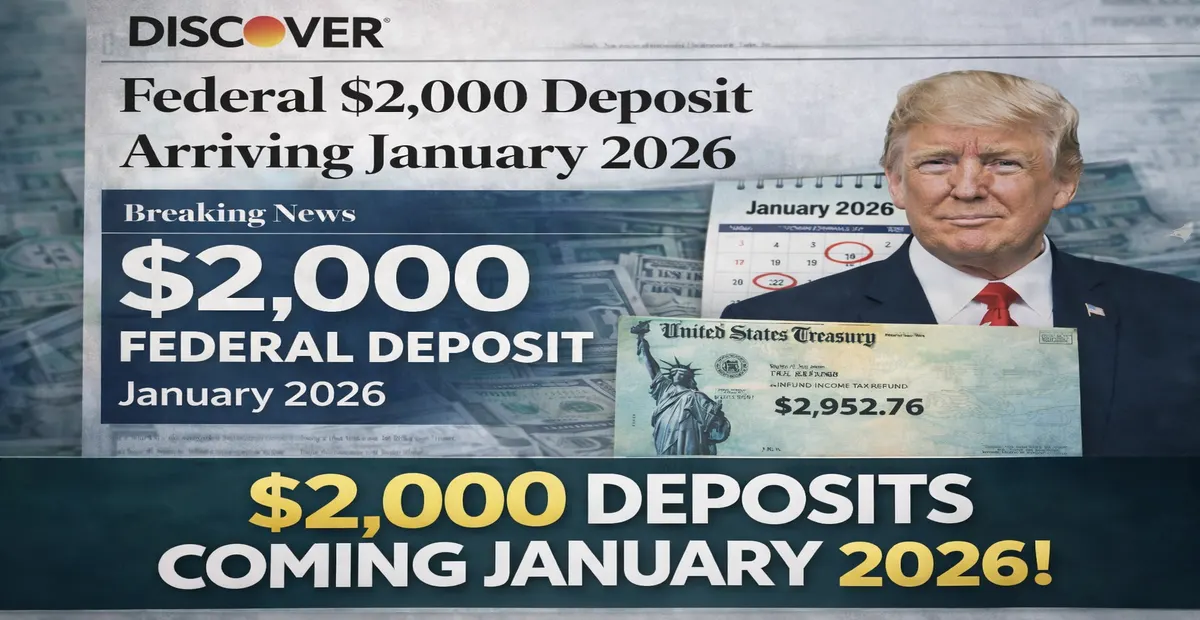
As January 2026 approaches, social media, group chats, and some websites are buzzing with talk of a “Federal $2,000 direct deposit.” Many people see this as a potential relief, especially after years of rising inflation and everyday expenses stretching household budgets. But with news like this, the most important thing is to understand the facts first and then draw conclusions, so you can avoid false hopes and misinformation.
First things first: Will every American get $2,000?
The simple answer is no—there is no clear confirmation that every American will receive a universal $2,000 payment all at once in January 2026. Many times, the internet combines different programs, tax credits, and state-level assistance and presents them as a single payment. This is why it can seem like everyone will see $2,000 hit their account on a fixed date, while the reality is usually very different.
So where did the $2,000 figure come from?
The discussion isn’t completely made up, but in most cases it comes from targeted assistance programs. Under certain programs, people may receive money through tax credits, benefit increases, or specific forms of support, and in some situations the total value can add up to around $2,000. For example, this amount might come from expanded tax credits, energy or utility assistance, a state rebate, or payments tied to certain benefit programs.
Who might qualify for payments like this?
Federal and state assistance is not given to everyone automatically—it depends on eligibility. Typically, low- to middle-income individuals and families are prioritized, because many programs are based on income limits shown in tax records. Families with young children may benefit from programs like the Child Tax Credit, which can increase the total support they receive. In some cases, seniors and people receiving SSI or Social Security benefits may also fall within the scope of higher payments. State governments may issue their own tax rebates depending on budget conditions, so residents of certain states could see extra benefits. There are also assistance programs for people facing pressure from utility bills, medical costs, or housing expenses, although these often require proper documentation.
How to confirm accurate information
The biggest risk with viral payment news is misinformation and scams. That’s why it’s essential to rely only on official sources. For anything related to federal taxes or credits, the IRS official website is the most reliable source. For government benefit programs, Benefits.gov is a useful platform. For SSI and Social Security updates, the SSA website is the best place to check. If a state rebate or assistance program is being discussed, always confirm it on that state’s official .gov website.
What should you do right now?
If you want to stay prepared for any federal or state support, a few steps can really help. First, file your tax return on time and accurately, since many programs use tax records to verify income and bank details. Second, make sure your direct deposit banking information is correct and up to date, so any payment that is issued doesn’t get delayed. It’s also important to regularly check your mail and email, as government agencies often send official notices or updates through those channels.
How to avoid rumors and scams
Whenever talk of “free money” goes viral, scammers become more active. Remember, government agencies do not ask for your bank details, passwords, or one-time codes through phone calls, text messages, or social media. If a link claims it can get you paid faster or asks for personal information, be cautious and rely only on official sources.
Final takeaway: Stay hopeful, but stay informed
In times of high inflation, help like $2,000 isn’t just money—it’s peace of mind. But the safest way to receive any legitimate relief is to focus on official government updates and keep your records accurate. It’s very possible that a “$2,000 for everyone at once” payment won’t happen, but targeted assistance programs continue to support millions of people. With the right preparation, you won’t miss out on benefits you’re actually eligible for.
Disclaimer: This article is for general information only. Always confirm payment details, eligibility, and dates through official government websites or notices.